
Cheshire East’s 180,000 new food caddies – could taxpayers’ money and plastic have been saved?
By The Editor 8th Sep 2026
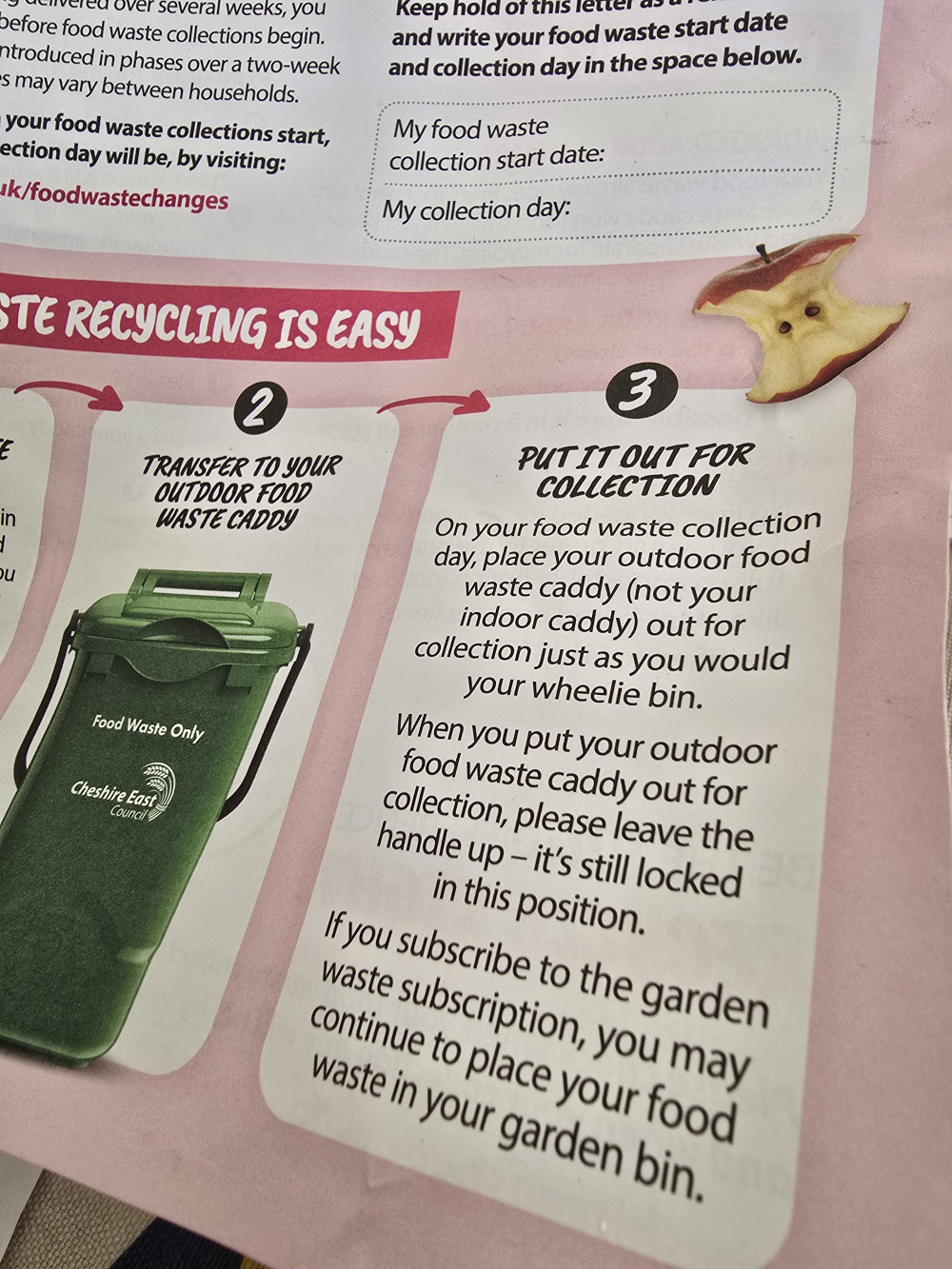


Cheshire East Council has purchased 180,000 new 23-litre food-waste caddies at a contract value of £640,800 – equivalent to £3.56 per caddy – as part of the new food-waste collection service.
However, the council's own information tells residents who subscribe to the garden-waste service that they can continue putting food waste into their garden bin when it is collected.
Cheshire East had more than 100,000 garden-waste subscribers last year.
That raises an obvious question: why weren't those households simply asked whether they actually wanted another plastic caddy?
Clearly, some would still want one, particularly because the new food-waste collection is weekly whereas garden waste is fortnightly. But surely giving people the choice would have been worth considering.
If 100,000 subscribers had declined a caddy, that would represent up to £356,000 worth of caddies that potentially wouldn't have been required.
And that's before the cost of delivering them.
There's also an environmental question.
Download our Nub News App!
- It’s FREE and available now- Breaking news notifications
- Your Town in Your Pocket


These are 180,000 newly manufactured plastic containers. They have to be manufactured, transported and then distributed to households across Cheshire East – all of which has an environmental footprint.
For a scheme designed to improve our environmental performance, was anybody asked to calculate the environmental impact of producing and delivering thousands of plastic caddies to residents who might not actually want or need one?
I think there are some questions worth putting to Cheshire East Council:
Why was an opt-out not offered?
How many garden-waste subscribers actually intend to use the new caddy?
How many companies competed for the £640,800 caddy contract?
What was the cost of the separate distribution contract?
Who ultimately benefited from these contracts?

And, most importantly, did the council calculate how much taxpayers could have saved by asking residents whether they wanted a caddy before ordering 180,000 of them?
There may be perfectly reasonable answers to all of this.
But at a time when Cheshire East is under serious financial pressure and residents are repeatedly being told about the need to save money and protect the environment, I think this raises more questions than answers.
Download our Nub News App:
- It’s FREE and available now
- Breaking news notifications
- Your Town in Your Pocket
Share: